Beyond Products
Better Living
Your pet’s quality of life isn’t just about what you buy — it’s about how you spend time together. Enrichment, exercise, mental stimulation, and home wellness routines that actually make a difference.
Your pet’s quality of life isn’t just about what you buy — it’s about how you spend time together. Enrichment, exercise, mental stimulation, and home wellness routines that actually make a difference.
Dogs need mental exercise just as much as physical. Boredom leads to destructive behavior, anxiety, and depression. Enrichment isn’t a luxury — it’s a necessity.
Let your dog lead the walk with their nose. 20 minutes of sniffing is as tiring as an hour of walking. Stop rushing walks — let them explore scent trails, mark spots, and investigate. This is their mental gym.
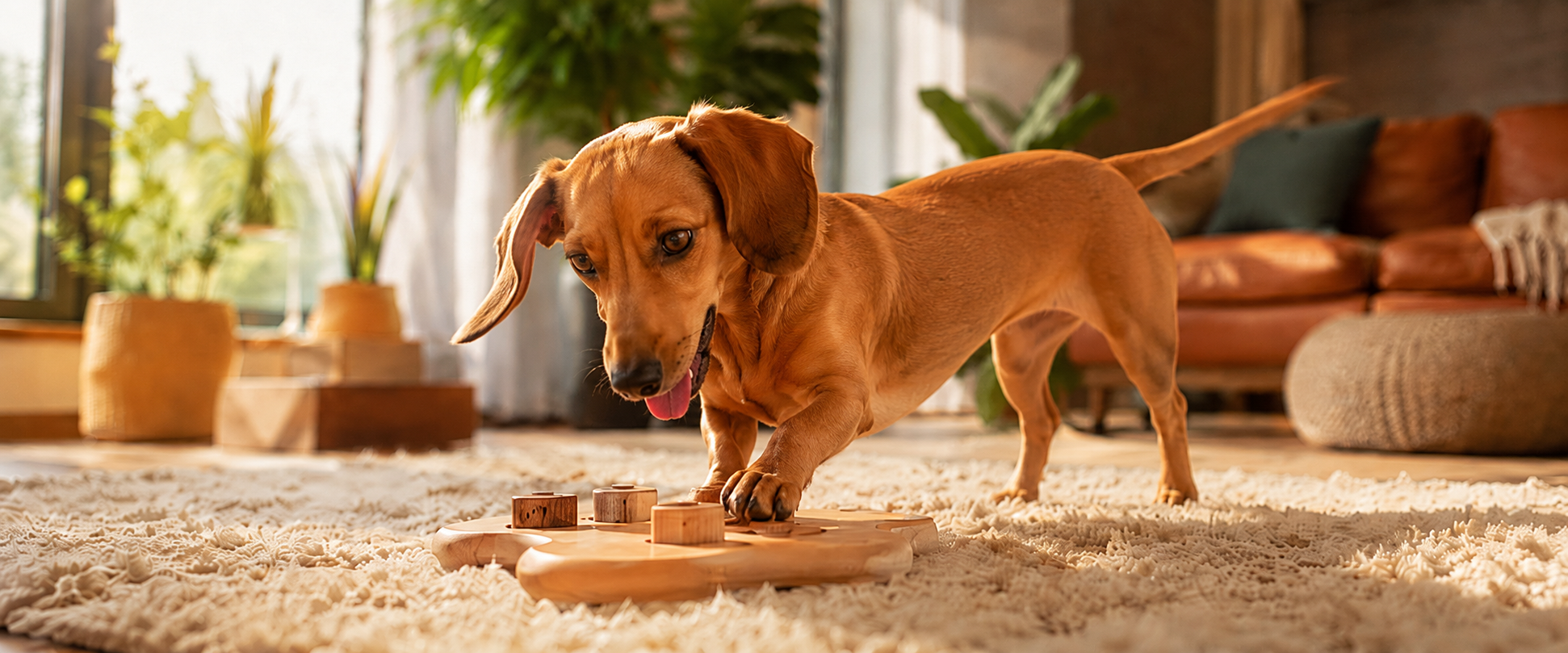
Ditch the bowl. Scatter feeding, lick mats, snuffle mats, and puzzle toys turn mealtime into a 20-minute brain workout. Start easy and increase difficulty as they learn.
5-minute training sessions throughout the day provide more mental stimulation than a 1-hour walk. Teach new tricks, practice impulse control, or try nose work games hiding treats around the house.
The right exercise prevents obesity, strengthens joints, improves behavior, and extends lifespan. But it has to match your dog’s breed, age, and condition.
A Border Collie needs 2+ hours of high-intensity activity. A Bulldog overheats with 30 minutes of fetch. Know your breed’s limits. Check our breed guides for specifics.
Low-impact, full-body workout — ideal for senior dogs, dogs with joint issues, or high-energy breeds in hot weather. Start in shallow water and never force a dog who doesn’t enjoy it.
You don’t need equipment. Use broomsticks as jumps, chairs as weave poles, and blankets as tunnels. Agility builds confidence, coordination, and the human-dog bond.
Gentle stretching, massage, and mobility exercises keep joints healthy, speed recovery, and help senior dogs stay comfortable. You can do most of this at home.
Gentle hip flexion, shoulder extension, and spinal stretches. Hold each position for 5–10 seconds, 3 reps. Best done after a warm-up walk when muscles are loose. Great for senior dogs and breeds prone to joint issues.
Effleurage (long, gentle strokes) along the spine and limbs promotes circulation and relaxation. 5–10 minutes daily reduces anxiety, eases muscle tension, and strengthens your bond. Stop if your dog shows discomfort.
Wobble boards, cavaletti poles (broom handles on books), and sit-to-stand exercises build core strength and body awareness. Especially valuable for post-surgery rehab and senior dogs losing coordination.
Mental health matters for pets too. Stress, anxiety, and boredom are real conditions that affect quality of life. Here’s how to build a calmer, happier dog.
Every dog needs a safe retreat — a crate with a blanket, a quiet corner with their bed, or a covered den. This isn’t isolation; it’s giving them a place to decompress when the world gets overwhelming.
Dogs thrive on routine. Consistent meal times, walk times, and sleep times reduce anxiety more than any supplement. When routines must change, introduce transitions gradually.
Not every dog is a dog park dog — and that’s okay. Parallel walks with a calm friend, controlled sniff-and-greets, or simply more quality time with you can fulfill social needs without the stress of chaotic group settings.
Small, daily habits that compound into a healthier, happier pet.